British hacker jailed for six years over theft of $11.6 million in crypto

November 19, 2026
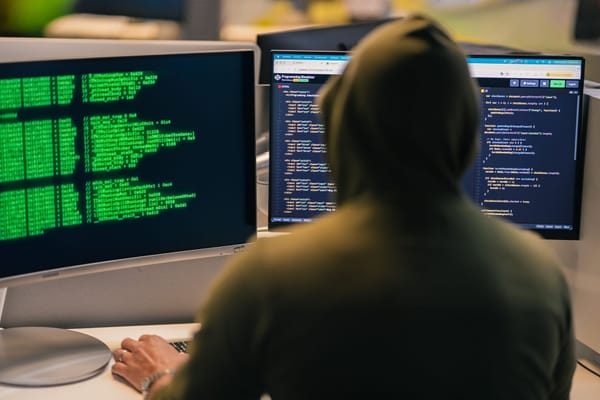
Scottish hacker Tyler Buchanan has been sentenced to six years in a US federal prison for his role in a cybercrime operation that used phishing messages, stolen credentials and SIM swapping to steal millions in cryptocurrency.
A 24-year-old British hacker linked to the notorious Scattered Spider cybercrime group has been sentenced to six years in federal prison for helping steal more than $11.6 million in cryptocurrency from victims across the United States.
Tyler Robert Buchanan, of Dundee, Scotland, received the sentence on Nov. 17 after pleading guilty earlier this year to conspiracy to commit wire fraud and aggravated identity theft.
According to the US Department of Justice, Buchanan and his accomplices hacked into at least a dozen companies between September 2021 and April 2023, stealing employee credentials and confidential information that helped them gain access to cryptocurrency accounts.
Buchanan is the fifth and final defendant sentenced in the case, which involved an investigation supported by law enforcement agencies in the United States, Britain and Spain.
Key points
- Scottish hacker Tyler Buchanan receives a six-year prison sentence for his role in a $11.6 million cryptocurrency theft operation
- The Scattered Spider-linked group targeted employees at more than a dozen companies with SMS phishing messages
- Stolen corporate credentials and SIM swapping helped the criminals break into victims' cryptocurrency accounts
- All five defendants have now been sentenced, with prison terms ranging from two to 10 years
Fake IT messages opened the door
The operation relied heavily on social engineering rather than sophisticated malware.
Buchanan and his accomplices sent hundreds of phishing text messages to employees at technology companies, telecommunications providers, cloud communications businesses and IT suppliers.
They impersonated employers or contracted IT service providers, directing recipients to fraudulent websites made to look like legitimate corporate login pages.
Employees who entered their usernames, passwords or personal information unknowingly handed their credentials to the attackers.
The group developed a phishing kit that automatically collected the stolen login details and forwarded them to a Telegram channel administered by Buchanan and another conspirator.
Using these credentials, the hackers accessed corporate accounts and internal systems, stealing confidential business information and personal data, including names, email addresses, phone numbers and additional account credentials.
The stolen information then helped the criminals identify and target cryptocurrency owners.
SIM swapping helped bypass two-factor authentication
Once the hackers identified potential victims, they used stolen account information and SIM swapping to gain control of their digital assets.
SIM swapping involves fraudulently convincing a mobile carrier to transfer someone's phone number to a SIM card or device controlled by an attacker.
Once the transfer is complete, the criminal can receive calls and text messages intended for the legitimate subscriber, including one-time security codes used to access online accounts.
This allowed Buchanan and his accomplices to bypass SMS-based two-factor authentication and break into cryptocurrency accounts and wallets.
Investigators also discovered files containing victims' personal information on a device found at Buchanan's residence in Scotland in April 2023.
The recovered data included cryptocurrency seed phrases and account login information belonging to one victim. A seed phrase can provide access to a cryptocurrency wallet, potentially allowing anyone who possesses it to take control of the funds.
The operation ultimately resulted in the theft of at least $11.6 million in cryptocurrency from victims across the United States.
Prosecutors said the thefts had "severe, life-altering consequences" for many of those affected.
All five defendants now sentenced
Buchanan has been in US federal custody since April 2025. He pleaded guilty on April 17, 2026.
His four co-defendants have also pleaded guilty.
Noah Michael Urban, 22, received the longest sentence, at 10 years. Ahmed Hossam Eldin Elbadawy, 25, and Evans Onyeaka Osiebo, 22, were each sentenced to 45 months, while Joel Martin Evans, 27, received two years.
Buchanan's sentencing closes the criminal proceedings against the five defendants, although a restitution hearing is scheduled for Dec. 11.
The case is linked to Scattered Spider, a loosely organized cybercrime collective known for targeting major companies through phishing, employee impersonation and other social engineering techniques.
The group has been associated with several high-profile corporate breaches and ransomware attacks, showing how attackers can compromise major organizations by manipulating employees into granting access.
How to protect yourself from phishing and SIM swapping
A compromised workplace account can expose far more than corporate information. Stolen employee credentials and personal data can also help criminals target individuals and their financial accounts.
You can reduce your exposure by taking a few precautions:
- Avoid SMS-based authentication when possible. Use an authenticator app, passkeys or a hardware security key for important accounts, particularly email, banking and cryptocurrency services
- Add protection to your mobile account. Ask your carrier about account PINs, port-out locks and other safeguards against unauthorized number transfers
- Be wary of unexpected login requests. Don't enter credentials through links received in unsolicited texts, even when they appear to come from your employer or IT department
- Protect cryptocurrency recovery phrases. Never share wallet seed phrases or store them in unsecured files, emails or cloud documents
- Watch for a sudden loss of mobile service. An unexpected loss of cellular connectivity can indicate that your phone number has been transferred without your authorization
If your phone suddenly loses service and you suspect a SIM swap, contact your mobile carrier immediately. You should also secure your email and financial accounts from a trusted device and alert any cryptocurrency platforms where you hold funds.
Also consider using security software with anti-phishing protection to help identify fraudulent websites before they capture your login credentials.
On topic:
US freezes billions stolen by North Korean hackers in Binance heist
Binance warns iPhone users of security flaw that could expose crypto wallets
Europol busts investment scam network spanning 50 countries, seizes over 100 servers
tags
Author

Filip has 17 years of experience in technology journalism. In recent years, he has focused on cybersecurity in his role as a Security Analyst at Bitdefender.
View all postsYou might also like
Bookmarks
