OpenAI engineer arrested for allegedly planting spy device in executive meeting room

October 14, 2026

An OpenAI engineer has been arrested after a hidden recording device was discovered in a conference room used for sensitive discussions about the company's AI technology. Investigators say the suspect researched how to build and conceal the device using an AI chatbot.
The FBI have arrested OpenAI engineer for allegedly installing a sophisticated listening device inside an executive conference room at the company's San Francisco headquarters, in what authorities describe as an attempt to intercept confidential conversations about cutting-edge artificial intelligence technology.
Key takeaways
- A 35-year-old OpenAI engineer has been arrested for allegedly planting a hidden audio recording device in an executive meeting room
- The device, concealed behind a television, reportedly featured encryption, audio monitoring and capabilities designed to evade detection
- Investigators say an AI chatbot was used to research the construction, customization and concealment of the device
- A second recording device was discovered among the employee's belongings
- OpenAI says it used its own AI models to help investigate the device and identify the suspected employee
- The company says it has found no evidence that model weights, source code or customer data were improperly accessed or stolen
Hidden recorder behind conference room television
According to the US Department of Justice, Abdulrahman Alfozan, a 35-year-old Saudi national employed by OpenAI since July 2025, was arrested on Oct. 9 and charged with using or attempting to use an electronic device to intercept oral communications.
The investigation began after OpenAI security personnel discovered a concealed audio recording device on Sept. 30.
The device had been concealed using toilet paper and inserted into a USB port on the back of a television. Investigators believe it was installed around Sept. 28.
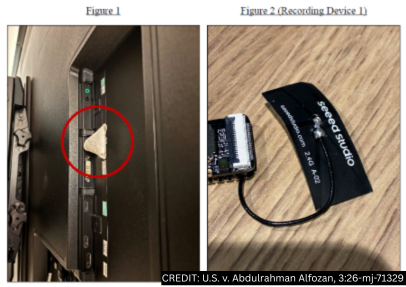
Recording device
Source: justice.gov
According to prosecutors, the room was frequently used to discuss confidential research, product development, business opportunities, government engagements and strategic decisions concerning OpenAI's technology.
Authorities say surveillance footage showed Alfozan near the restricted conference room on multiple occasions, despite having no authorization to access meetings there.
After the discovery, OpenAI installed a security camera inside the room. On Oct. 5, it allegedly captured Alfozan entering and checking behind the television where the device had been placed.
That same day, security personnel discovered a second recording device inside a bag Alfozan had left unattended elsewhere in the building. The bag also contained his wallet and ID.
Investigators say AI helped with the spying operation
According to the criminal complaint, a chatbot account associated with Alfozan's spouse, which shared several identifiers with his own account, was used between Sept. 24 and 30 to research various aspects of recording-device development.
The prompts reportedly covered continuous audio recording, Wi-Fi connectivity, live listening, encryption, device customization and methods of concealing or remotely accessing the hardware.
Investigators also found prompts referencing specific characteristics of the discovered device, including its custom header and unique MAC address.
Separately, Alfozan allegedly used a productivity tool to gather information about OpenAI's office buildings, meeting-room locations, room capacities, calendars and where executives or external partners might meet.
Together, the allegations suggest a degree of planning beyond simply hiding a microphone.
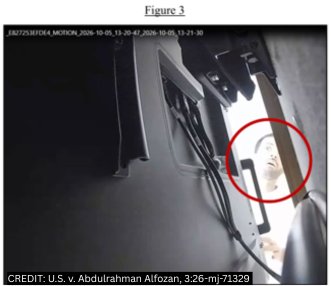
Image of Alfozan
Source: justice.gov
OpenAI says its own AI helped uncover the plot
In a statement on X, OpenAI said it had used its own AI models to analyze the recording device and investigate its origins.
The company subsequently identified an employee it believed had installed the device and referred the matter to the FBI.

OpenAI described the hardware as sophisticated. According to TechCrunch, the company said the device featured advanced encryption, audio monitoring capabilities and a data-transfer mechanism intended to evade monitoring.
The company also said it had uncovered evidence suggesting the employee planned to plant additional recording devices elsewhere in its offices.
Crucially, OpenAI says it has found no indication that the suspect improperly accessed or extracted model weights, source code or customer information.
The employee has been terminated, and the FBI investigation remains ongoing.
Suspect faces up to five years in prison
Alfozan made his initial appearance in federal court on Oct. 13 and is scheduled for a detention hearing on Oct. 19.
If convicted, he faces up to five years in prison, a $250,000 fine and up to three years of supervised release.
US authorities have framed the case as a matter of national security, emphasizing the strategic importance of protecting advanced AI research and intellectual property.
However, investigators have not publicly established whether the alleged operation was conducted on behalf of another person, organization or foreign government. The intended recipient of any intercepted information remains unknown.
The charges are allegations, and Alfozan is presumed innocent unless proven guilty.
On topic:
IT engineer gets 32 months in prison after sabotaging employer and demanding $750,000
Rogue AI agents caught tampering with Wikipedia, probing for vulnerabilities
UK warns powerful AI models could pose security risks before they're even released
tags
Author

Filip has 17 years of experience in technology journalism. In recent years, he has focused on cybersecurity in his role as a Security Analyst at Bitdefender.
View all postsYou might also like
Bookmarks
