Hiring Season Is Scam Season: How Fake Recruiters Exploit Job Seekers with Trusted Brand Names

January 21, 2026

Job hunting season is prime time for scammers posing as recruiters from trusted companies. With promises of quick hiring and flexible roles, these scams are designed to catch job seekers off guard. Understanding how fake recruiter scams work is key to protecting your personal data and finances.
Key Takeaways
- Fake recruiters impersonate trusted brands to gain credibility. Scammers pose as well-known companies like Amazon or major institutions to trick job seekers into trusting the offer.
- Scams often start with “too good to be true” job offers. Victims are told their CV was already approved and are pushed to confirm interviews quickly—even if they never applied.
- The goal is to steal data, money, or credentials. Victims may be asked to submit personal documents, pay onboarding fees, or log into fake portals that harvest passwords.
- Urgency and off-platform communication are key tactics. Scammers pressure candidates to act fast and move conversations to apps like WhatsApp or Telegram to avoid detection.
How Fake Recruiter Scams Work and How to Avoid Them
The start of the year is when many people look for a new beginning. Companies reopen hiring budgets, seasonal roles open, and job seekers apply, whether they’re unemployed, changing careers, or simply hoping for something better.
But scammers are always watching the calendar, too.
According to Bitdefender’s Antispam Lab latest data, a wave of fake recruitment emails is actively circulating, timed to coincide with the early-year hiring surge. These scams impersonate well-known employers and staffing companies, promising easy jobs, fast interviews, and flexible work.
‘Your interview is confirmed’
These scams open with good news – very good news in fact. Recipients are told their résumés have already been reviewed and approved. Sometimes the message references a job platform like Indeed. Other times, it arrives unexpectedly, even if the victim never applied.
The emails often include claims that the candidate is an “excellent fit” and a request to confirm an interview, secure a spot, or continue the process.
The brands that scammers impersonate
Samples detected by Bitdefender Antispam Lab researcher Viorel Zavoiu show a consistent pattern: attackers impersonate large, familiar employers that people already trust, including Amazon, Carrefour, and even the NHS.
Same scam, different languages
One notable detail across some of these campaigns is their global reach. The messages appear in multiple languages, including English, Spanish, Italian, and French, often tailored to the recipient’s location. Top targets include people in the US, the UK, France, Italy and Spain.
Despite the language changes, the structure remains nearly identical:
- Immediate approval
- Little or no interview process
- Calls to action like Confirm Interview, Continue, or Secure My Spot
- Requests to move the conversation to WhatsApp, Telegram, or Microsoft Teams
Once you recognize the pattern, it becomes obvious.
Although not all recruitment scam emails we’ve detected look the same, the styles and approaches share the same goal. Some messages read like formal HR emails, while others rely on slick visuals and one-click actions. Both aim to rush job seekers into engaging before they have time to verify anything.
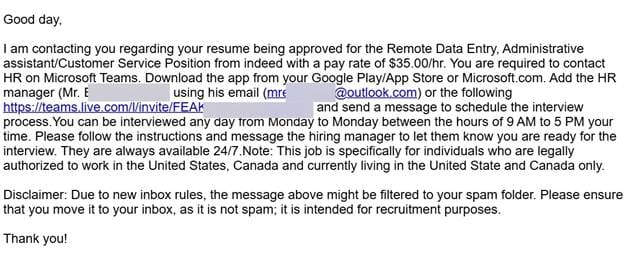
Direct-contact recruitment scams typically involve long, text-heavy emails. They may claim your résumé has already been approved and provide detailed instructions on what to do next. Recipients are instructed to download a messaging app, contact a designated “HR manager,” or use an external platform to schedule an interview. The tone is procedural and authoritative, designed to mimic a real corporate hiring process. Once the conversation moves off email, scammers can more easily extract personal information, request identity documents, or introduce fees disguised as onboarding or training costs.
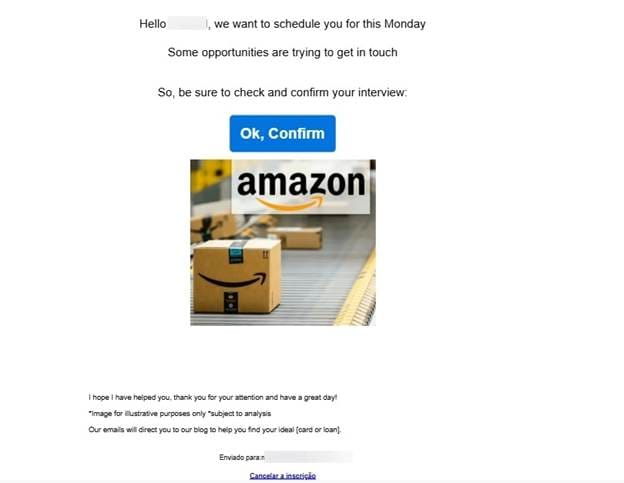
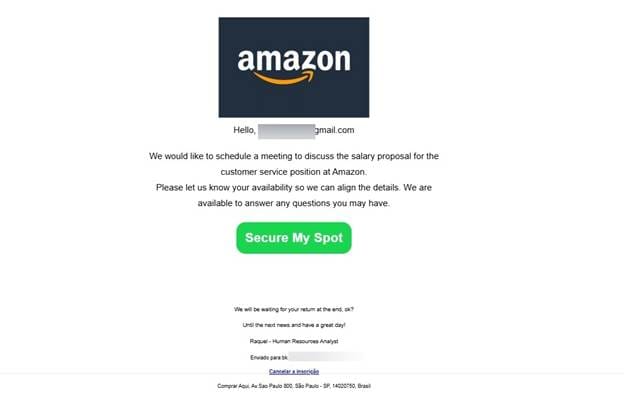
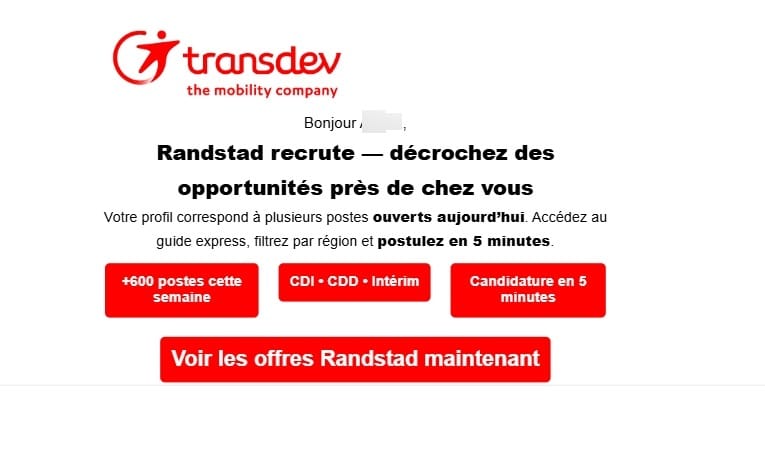
One-click confirmation scams, on the other hand, are visually polished and stripped of detail. These messages often include company logos, short, reassuring copy, and prominent buttons such as “Confirm Interview” or “Secure My Spot.” Instead of explaining the job, they focus on speed and convenience. Some even add “voice messages” (you can’t listen to) to feel more personal. Clicking the button typically leads to a fake page that harvests credentials, collects sensitive data, or redirects to malicious content.
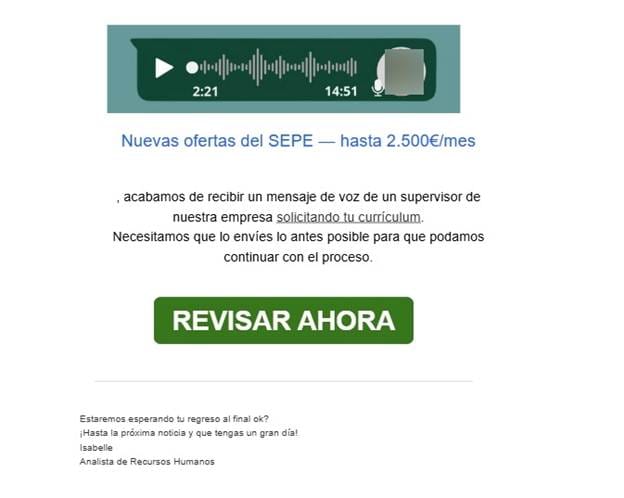
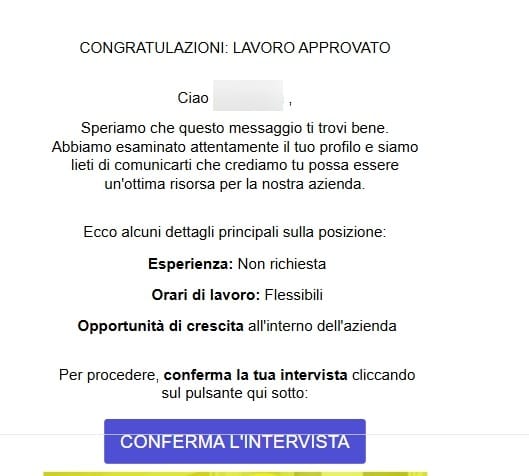
Despite their different formats, both scams rely on the same psychological triggers: trust in well-known brands, urgency, and the fear of missing out on a good opportunity.
What happens after you click
What begins as a promising job opportunity can quickly turn into a serious security incident:
- Personal data theft: Victims are asked to submit CVs, IDs, or contact details
- Credential harvesting: Fake portals collect email or account passwords
- Advance-fee fraud: Requests for “training,” “equipment,” or “processing” fees
- Malware delivery: Links or attachments disguised as interview materials install malicious software
Red flags every job seeker should watch for
If a recruiter does any of the following, it’s time to stop and verify:
- Contacts you without a prior application
- Approves your profile immediately
- Avoids real interviews or live calls
- Uses a sense of urgency or emotional pressure
- Uses generic Gmail or Outlook addresses
- Sends links that don’t match the company’s official domain
- Asks you to move communication to messaging apps early
Remember: No legitimate employer hires this way.
How to protect yourself during hiring season
If you receive a suspicious job offer:
- Don’t click links or buttons in unsolicited emails
- Verify openings directly on the company’s official careers website
- Check URLs carefully before opening any page
If you’re unsure whether a message is legitimate, tools like Bitdefender Scamio can help you assess suspicious emails, messages, or links by explaining whether something looks like a scam and why.
Before opening a recruitment link, you can also use Bitdefender Link Checker to see if a URL is associated with phishing or fraud.
If you have already interacted with a suspicious message:
- Change your passwords immediately
- Enable two-factor authentication
- Monitor your accounts for unusual activity
Protect yourself from all kinds of scams with Bitdefender Premium Security
Powered by advanced AI, it detects and blocks scams in real time across emails, texts, chats, websites, and even calendar invites.
Frequently asked questions (FAQ)
What is the 70/30 rule in hiring?
The 70/30 rule in hiring suggests that employers look for candidates who meet about 70% of the required qualifications, with the remaining 30% being skills they can learn on the job. It encourages both recruiters and candidates to focus on potential and adaptability rather than perfect matches.
What is a hiring scam?
A hiring scam is a fraudulent job offer designed to steal personal information, money, or login credentials. Scammers often impersonate real companies, promise high pay or quick hiring, and ask for fees, sensitive documents, or account access during the “recruitment” process.
What is the hardest month to get a job?
January is often considered one of the hardest months to get a job due to post-holiday slowdowns and budget resets. Hiring activity can also be low in late summer (August) and December, when companies reduce recruitment efforts. People looking for a job must be extra careful during months like these, as scammers' efforts may increase.
What are five warning signs of a scam?
Five common scam warning signs include:
- Requests for money or fees upfront
- Urgent pressure to act quickly
- Communication outside official channels
- Poor grammar or inconsistent details
- Offers that seem too good to be true
These red flags apply to job scams, phishing attempts, and many other types of online fraud.
tags
Author

Alina is a history buff passionate about cybersecurity and anything sci-fi, advocating Bitdefender technologies and solutions. She spends most of her time between her two feline friends and traveling.
View all postsYou might also like
Bookmarks
