Easter scam emails to watch out for in 2026

April 03, 2026
Easter scam emails are becoming more sophisticated, blending festive themes with urgency to trick unsuspecting users. From fake gift offers to delivery alerts, scammers exploit seasonal excitement to steal personal and financial data. Knowing how these Easter scams work can help you avoid costly mistakes.
Key takeaways
- “Free gift” scams are still dominant, with attackers impersonating brands like Aldi and Walmart to lure users into surveys and data collection traps, according to Bitdefender Antispam Lab
- Financial scams are on the rise, including fake Easter bonuses and payout schemes that require fees up front
- Delivery scams feel more urgent and targeted, often referencing Easter deadlines to pressure victims into quick payments
- Scam campaigns are increasingly mass-produced, using identical templates across multiple brands with minor changes
- The goal remains the same: steal personal data, login credentials, or money through urgency and deception
Every year, cybercriminals adjust their tactics to match the moment. Easter, with its mix of shopping, gifting, and promotions, creates the perfect opportunity. From free chocolate hampers to fake bonuses and delivery alerts, here’s what’s landing in inboxes right now.
Real easter scam emails spotted by Bitdefender Antispam Lab
Every year, our antispam researcher, Viorel Zavoiu, curates a selection of Easter-themed scams to help keep readers one step ahead. Here’s what stood out this year.
Free gift and survey scams (Aldi, Walmart, ButcherBox)
One of the most common emails claims you’ve been selected to receive a free Easter reward.
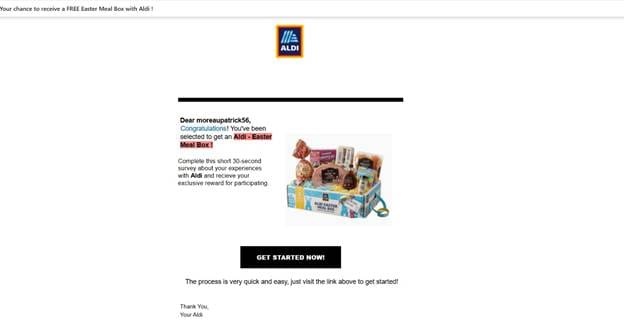
In one case impersonating Aldi, recipients are told:
“Congratulations! You've been selected to get an Aldi Easter Meal Box.”
To claim it, you’re asked to complete a short survey.
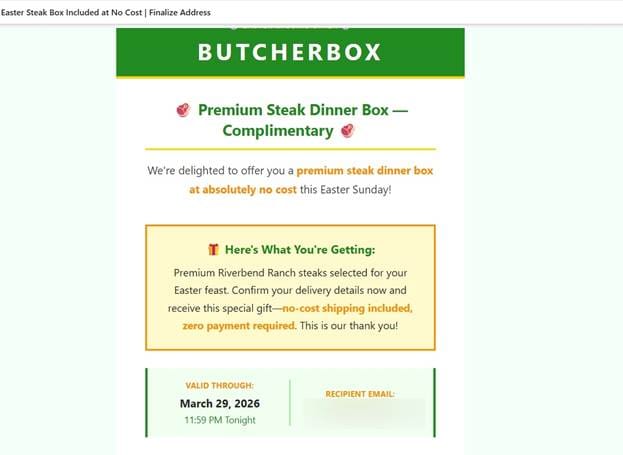
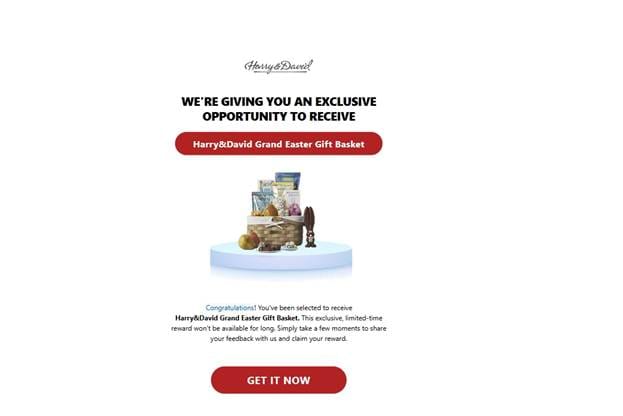
Similar emails spoof Walmart and ButcherBox, offering:
- Easter gift hampers
- premium steak dinner boxes
- exclusive baskets
These emails look polished and familiar. They use real branding, product images, and simple buttons like “Claim Now.”
But the goal isn’t to send you something.
Clicking usually leads to phishing pages designed to collect personal data and payment details, or to push users through survey loops that generate revenue for scammers.
Candy brand giveaways (Reese’s or Cadbury + Walmart combo)
Another variation uses recognizable brands to build trust.
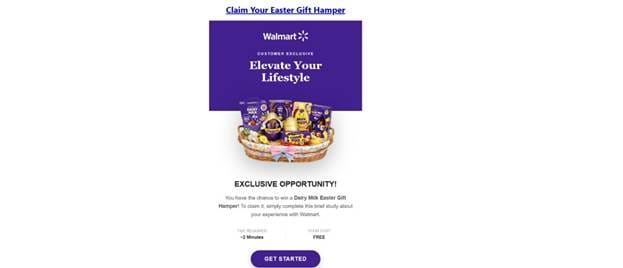
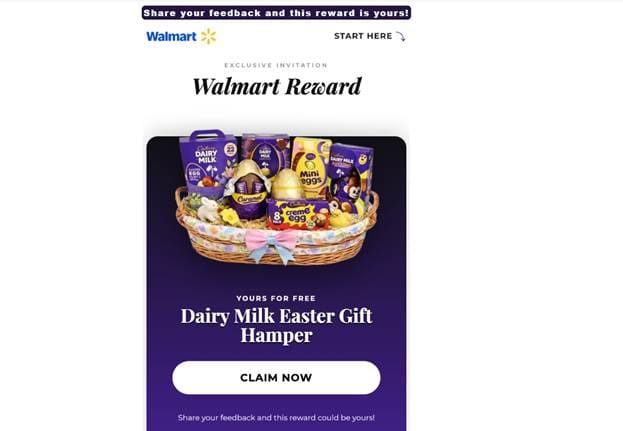
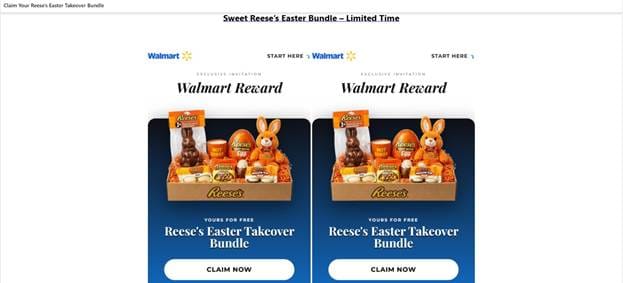
One example promotes a “Reese’s Easter Takeover Bundle” presented as a Walmart reward. It features clean visuals and even duplicates parts of the layout to look legitimate.
This scam follows the same pattern:
click → survey → data collection → possible payment request.
Fake delivery and ‘unclaimed package’ alerts
Some emails take a more urgent approach.
One example warns that unclaimed packages will be seized before Easter unless you act quickly. To receive your delivery, you’re asked to pay a small fee, sometimes via Bitcoin, gift cards, or wire transfer.
These scams work because people are already expecting deliveries.
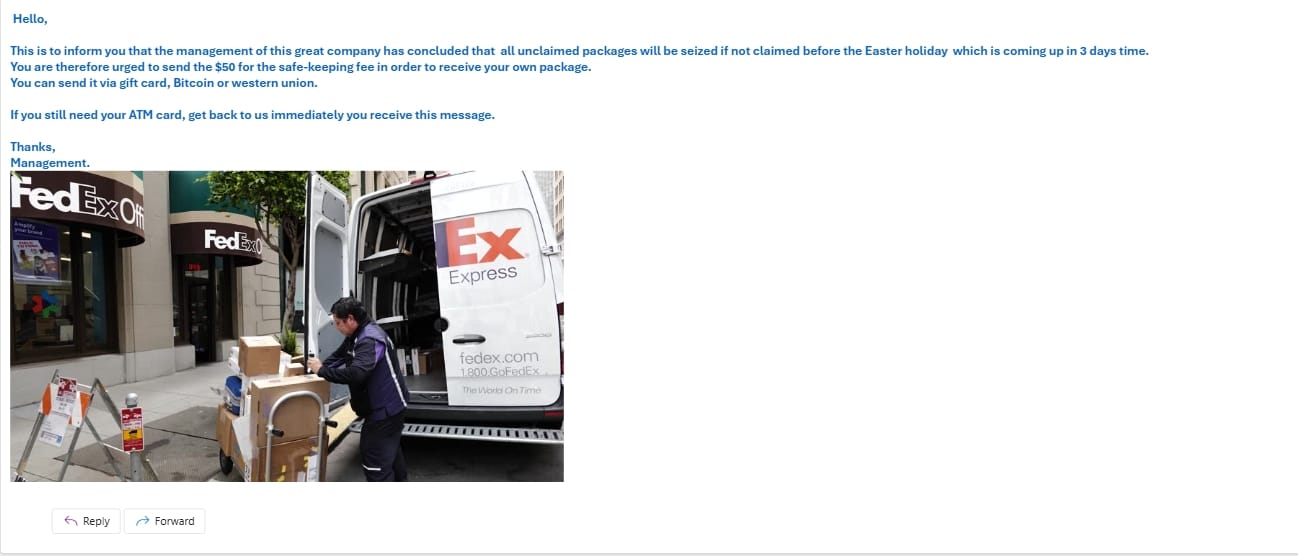
But real delivery companies don’t:
- request payment via gift cards or crypto
- use vague package descriptions
- pressure you with deadlines
Easter bonuses and giveaway scams
Some of the more interesting samples this year move beyond gifts and promise money.
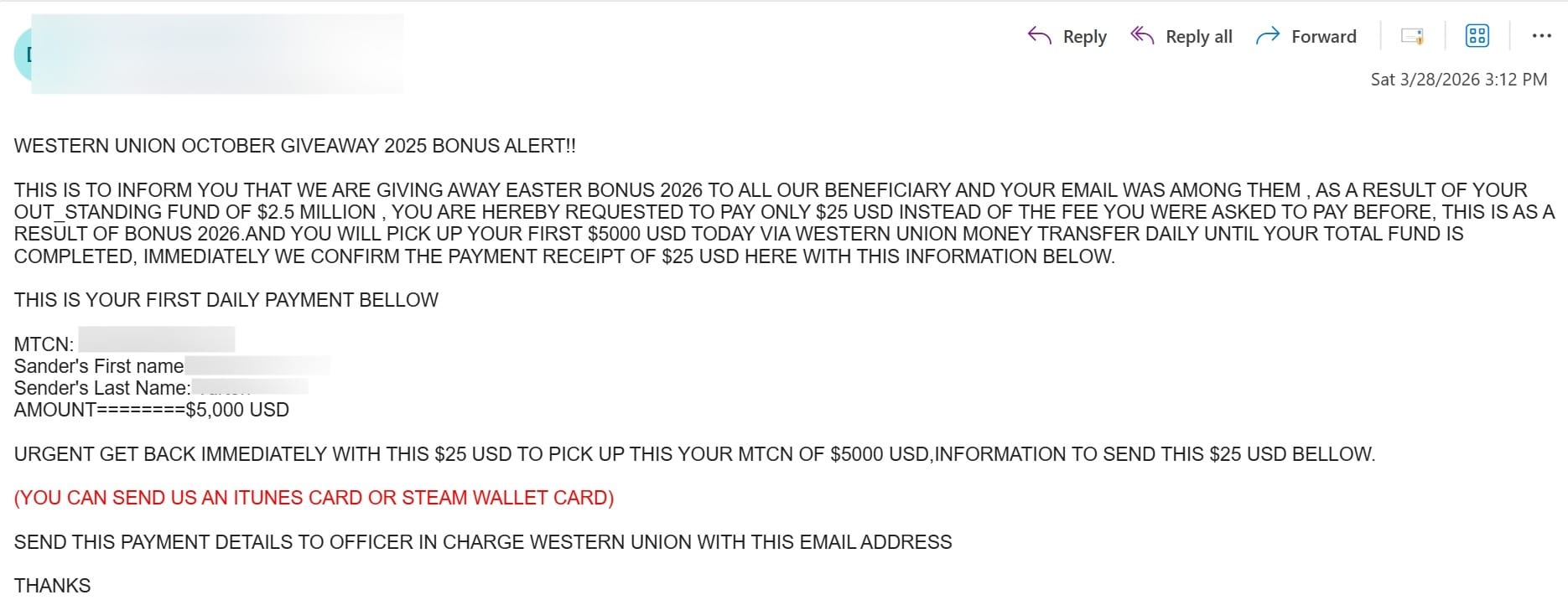
One email claims you’ve been selected for an “Easter Bonus 2026” and can receive thousands via Western Union, as long as you pay a small fee first.
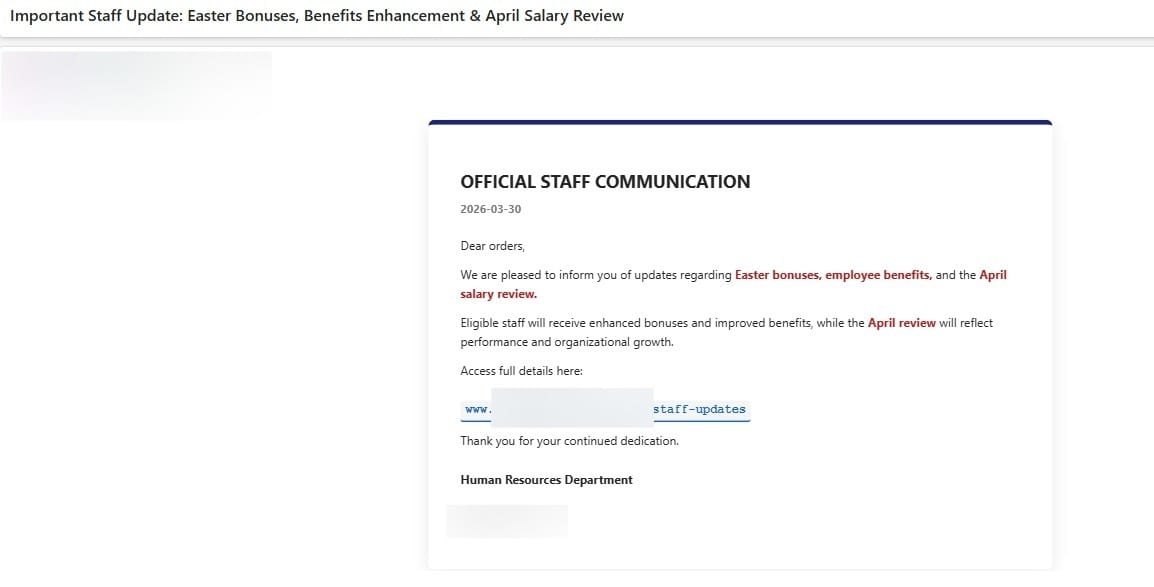
Another impersonates an HR department, announcing Easter bonuses and salary updates, then links to a fake internal portal.
The outcome is the same—you either lose money or hand over your credentials.
Localized scams
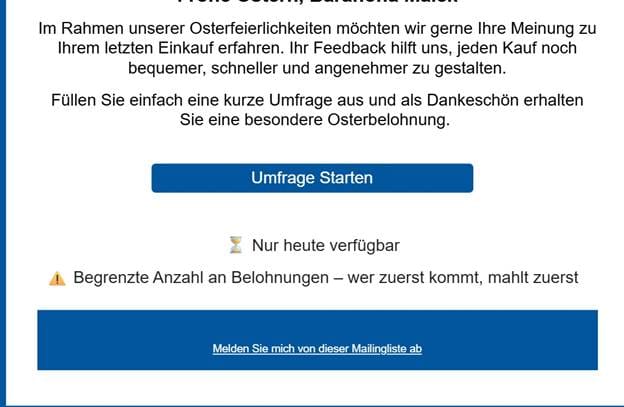
Some scam campaigns are tailored to specific regions, using local languages and familiar messaging.
For example, German-language emails invite users to complete a quick survey in exchange for an Easter reward, often with phrases like “limited availability” or “only today.”
Easter-themed dating and adult lures
Not all scams are family-friendly.
Some emails bank on curiosity instead of trust, with subject lines like:
“Take it easy with Easter girls”
These lead to questionable platforms or malicious pages.

How easter email scams have evolved since last year
If you look at last year’s Easter scams, the patterns are indeed similar, with most campaigns focused on:
- fake chocolate hampers
- gift cards and coupons
- survey-based rewards
- festive e-cards leading to phishing pages
In short, they relied heavily on free gifts and seasonal giveaways.
However, things have shifted a bit this year.
Scammers are expanding beyond simple lures and moving toward more direct and urgent tactics.
Delivery scams have also become more context-aware. Instead of generic “missed package” messages, they now reference Easter deadlines and create a greater sense of urgency.
At the same time, many campaigns show clear signs of mass production. The same templates appear across different brands, with only logos or product images swapped out.
How to spot an Easter scam emails before it’s too late
You don’t need technical knowledge to avoid them.
Just slow down and look twice.
- Pause before clicking: Seasonal emails are designed to rush you
- Check the sender carefully: A logo doesn’t guarantee legitimacy
- Be skeptical of free offers: Especially if action is required
- Avoid logging in through email links: Go directly to the source
- Watch how they ask for payment: Gift cards and crypto are major red flags
- Verify before you trust: Tools like Bitdefender Scamio or Bitdefender Link Checker can help you quickly assess suspicious messages or links before interacting with them
What to do if you’ve already clicked
These scams are designed to catch people off guard.
If you have interacted with one:
- change your passwords immediately
- enable two-factor authentication
- scan your device for threats
- monitor your accounts closely
- contact your bank or card provider as soon as possible if you made a payment, to limit potential losses or block transactions
Using a trusted security solution can also help detect and block malicious links, phishing attempts, and hidden threats before they cause harm, adding an extra layer of protection for you and your family, especially during busy holiday periods.
Frequently asked questions (FAQ)
What are 5 of the most current scams?
Five of the most current scams include:
- AI voice cloning scams (impersonating family or officials)
- Phishing and smishing attacks (fake emails and text messages)
- Job and employment scams (fake remote job offers)
- Impersonation scams (government, banks, or tech support)
- Online shopping scams (fake stores or counterfeit products)
These scams are increasingly sophisticated and often use AI to appear more convincing.
What scams are going on at the moment?
Current scams include AI-powered impersonation scams, fake job offers, phishing messages disguised as delivery or account alerts, and investment scams promising high returns. Seasonal scams (like tax or holiday scams) and fake product recall messages are also rising, often delivered via text or email to create urgency.
What are the most common online scams?
The most common online scams are phishing attacks, impersonation scams, investment fraud, online shopping scams, and prize or lottery scams. Phishing remains one of the largest threats, with millions of malicious sites created each year, while investment and impersonation scams cause the highest financial losses globally.
tags
Author

Alina is a history buff passionate about cybersecurity and anything sci-fi, advocating Bitdefender technologies and solutions. She spends most of her time between her two feline friends and traveling.
View all postsYou might also like
Bookmarks
