Depop Scams: How to Spot Fake Buyers, Sellers, and Payment Traps

January 09, 2026
Depop scams are on the rise as fraudsters exploit the platform’s peer-to-peer nature and younger user base. From fake buyers to phishing links and off-app payment traps, scammers use simple tactics to steal money and personal data. Understanding how Depop scams work is key to buying and selling safely.
Key Takeaways
- Most Depop scams rely on moving transactions off-platform. Scammers often ask users to pay via external methods like bank transfer or PayPal Friends & Family to bypass buyer protection.
- Phishing links and fake messages are common attack methods. Fraudsters impersonate Depop or buyers/sellers to steal login credentials and personal information.
- Both buyers and sellers are targeted. Fake listings, non-delivery scams, and fake payment confirmations can lead to financial loss or stolen goods.
- Staying within the app is the safest strategy. Using Depop’s official checkout and messaging system significantly reduces scam risk and keeps transactions protected.
How Depop Scams Work and How to Avoid Them
Depop has become a popular marketplace for secondhand fashion, vintage finds, and streetwear deals. But like most platforms where money is transferred between individuals, it has attracted scammers. While many people buy and sell safely every day, scams on Depop do happen, especially when users move communication or payment off the official platform.
Understanding how these scams work and what to watch out for can save you money, protect your personal data, and keep your account safe.
A Real-Life Depop Scam
A recent example out of Australia illustrates how convincing some scams can be:
Amy, a young woman in Queensland, listed a dress for sale on Depop. After agreeing on a price, the buyer moved the conversation to Instagram, claiming they needed a video of the dress there. The scammer later sent a fake payment confirmation.
"Usually, I am pretty onto it and I have helped other friends avoid scams," Amy told ABC news in August 2025. "For it to happen to me ... this situation got me off guard."
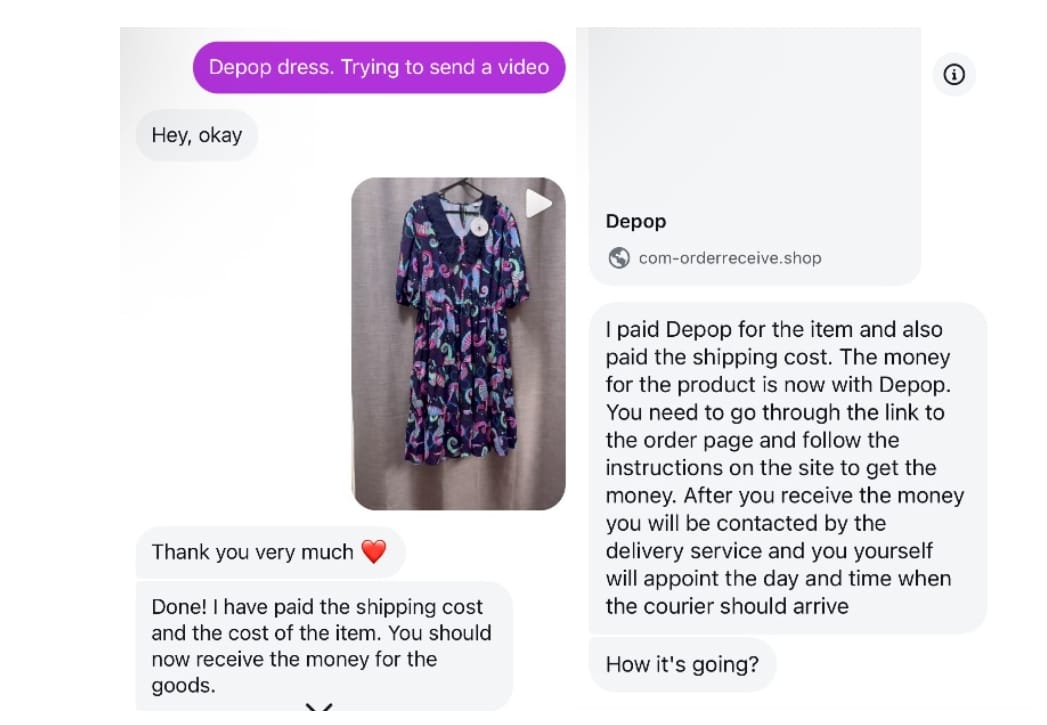
Source: ABC News
The scammer then sent an external link and asked her to complete steps outside Depop to receive the money. Thinking it was legitimate, she entered bank card details. Nearly $950 was stolen before her bank intervened.
This case shows several classic red flags:
- Moving communication off Depop
- Fake payment screenshots
- Directing users to external links that collect sensitive data
Data from Australian cyber support service IDCARE shows that many Depop users simply don’t expect to be targeted. Between July and August 2025, IDCARE said they received more than 30 reports from people who were scammed after advertising clothes on Depop. The victims lost an average of $2,947 each, and more than half of the reported victims were women under the age of 25.
In many cases, the scams followed the pattern seen in other Depop fraud reports:
- Initial contact through Depop
- A request to move the conversation off-platform
- Fake payment confirmations
- External links requesting personal or financial details
While some scammers move conversations to Instagram, others switch to WhatsApp, using whichever platform feels most familiar to the victim.
Common Depop Scam Tactics
Scammers on Depop often rely on urgency, trust, or off-platform maneuvering to trick users. Here are some common schemes:
Fake Listings and Stolen Photos
Scammers sometimes post listings using photos stolen from social media or other sellers to make their offer look legit and with prices that are just too good to pass.
Off-Platform Payment Requests
A frequent scam involves urging buyers to pay outside Depop via bank transfer, PayPal “Friends & Family,” or other methods. Important note: payments outside the app aren’t covered by Depop Protection.
Fake Payment Confirmations
Scammers can create convincing screenshots or emails claiming payment was sent, even when it wasn’t.
Bait-and-Switch
After a buyer pays in-app, the seller sends an item that’s different in size, condition, or brand than advertised.
‘Trades’ Scams
In a typical trade scam, one user agrees to swap items, asks the other person to ship first, then disappears once the package is sent. In some cases, the scammer sends a worthless or completely different item in return, or nothing at all.
Phishing and Account Takeovers
Scammers may send links that look official but are designed to capture your login credentials or payment info.
How to Stay Safe on Depop
Depop itself provides guidance on safe buying and selling. According to official Depop help resources, here are key safety measures to follow:
Stick to the Official Platform
- Only use the Depop app or website to buy and sell.
Vet Sellers and Listings
- Check a seller’s reviews and ratings before buying.
- Look closely at item photos and details; ask for more images if needed.
- For expensive items, request proof of authenticity.
Protect Your Personal Data
- Never share personal contact details like email, phone number, or bank information with buyers or sellers outside the platform.
- If someone directs you off Depop, report them immediately through the app.
Track Your Purchases
- Ask sellers to use tracked shipping to help resolve disputes if the item doesn’t arrive.
Use Security Tools
If a message, offer, or link feels suspicious (even if you can’t quite put your finger on why), tools like Bitdefender Scamio can help you quickly determine whether you’re dealing with a scam before you respond.
If you are unsure about any URLs, the free Bitdefender Link Checker lets you see whether a link is associated with phishing or fraud.
For broader protection against phishing attempts, malicious links, and account takeover threats across all your devices, a trusted Bitdefender security solution adds an extra layer of defense beyond marketplace safeguards.
What to Do If You Fell for a Depop Scam
If you realize you’ve been scammed (or think you might have been), acting quickly can limit the damage.
If You Clicked a Phishing Link or Shared Login Details
- Change your Depop password immediately, along with any other accounts using the same password
- Enable two-factor authentication if you haven’t already done so
- Check your account for unauthorized changes, listings, or messages
If You Entered Payment or Personal Information
- Contact your bank or card provider immediately to flag fraudulent activity
- Monitor your statements for unauthorized charges
- If sensitive personal data was exposed, consider placing a fraud alert or credit freeze with credit bureaus to prevent identity theft
If Your Account Was Taken Over
- Report the incident to Depop as soon as possible
- Secure your email account first since many takeovers start there
- Scan your device for malware if you downloaded anything or clicked suspicious links
If You Lost Money
- Save all evidence: messages, screenshots, payment records, and links
- Report the scam through Depop’s reporting tools
- File a dispute with your payment provider if the transaction wasn’t completed properly
FAQ
Are scams common on Depop?
Scams do occur on Depop, particularly when transactions move outside the platform’s official systems. Staying within the app’s messaging and checkout processes significantly reduces your risk.
Will Depop refund you if scammed?
Depop can offer refunds through its Depop Protection program if the purchase was made and paid for in-app, and you file a dispute with evidence.
What are red flags on Depop?
Red flags include requests to pay outside Depop, unusually low prices, new accounts with no reviews, external links sent outside the app, and pressure to finalize a deal quickly.
tags
Author

Alina is a history buff passionate about cybersecurity and anything sci-fi, advocating Bitdefender technologies and solutions. She spends most of her time between her two feline friends and traveling.
View all postsYou might also like
Bookmarks
