Beyond the Endpoint: Rethinking Security for the Modern Workspace

November 06, 2026
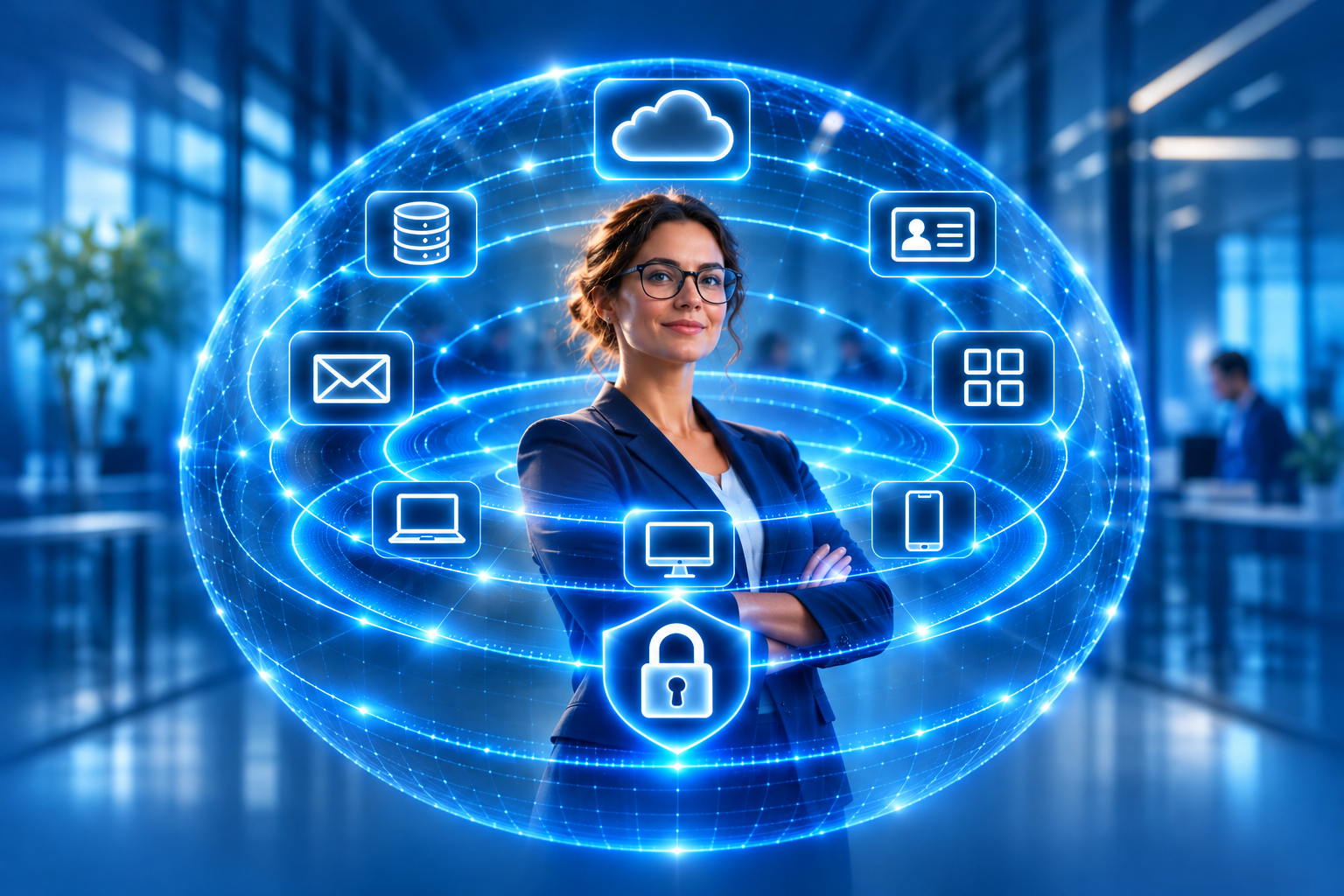
The way we work has changed significantly, and now the way we secure that work is changing with it. Again.
For years, organizations have added security technologies to address new risk categories as they emerged. Endpoint security, identity protection, email security, vulnerability management, data protection, and detection and response have each become important parts of the security stack.
But today's attacks rarely stay within one of those boundaries. This shift is driving a broader approach to protecting the modern digital worker: Workspace Security.
How Do You Define Workspace Security?
The workspace has become an interconnected attack surface, and workspace security looks beyond traditional boundaries to focus on the ways attackers now reach users and business data. Several shifts are accelerating this pivot toward workplace security.
1. Work is increasingly distributed. Endpoints, mobile devices, browsers, SaaS applications, and cloud services have extended work far beyond the corporate network.
2. Identity has become a critical security boundary. Attackers don't always need to break through traditional defenses if they can log in using compromised credentials, tokens, or sessions.
3. Applications and collaboration tools are part of the attack surface. Email, browsers, SaaS, and collaboration platforms connect users directly to business data and provide attackers with more opportunities to target them.
4. AI is adding another interaction layer. Generative AI and copilots are quickly becoming part of everyday workflows, creating new interactions between users, applications, and organizational data. It is also increasing the need for visibility and control into how AI is being used and what data it can access.
Rather than isolated changes, these shifts increasingly overlap within the same workflows and the same attacks.
What are the Risks of Operating Security in Silos?
Because users, identities, devices, applications, data, and AI are interconnected, protecting each in isolation leaves gaps between them.
Security architectures have traditionally been organized around individual control points. Endpoint tools protect devices. Identity tools protect accounts and access. Email security protects communications. Other technologies manage vulnerabilities, applications, and data.
Attackers see the environment differently.
A phishing email might lead to credential theft. Those credentials could provide access to a legitimate application. From there, an attacker may establish persistence, elevate privileges, move across systems, or access sensitive information.
One attack can therefore generate signals across the environment.
How Are Organizations Breaking Down Cybersecurity Silos?
According to Gartner®, "Cybersecurity teams with limited resources and a need to reduce silos require a simpler, more unified approach to securing digital work than traditional multivendor tool stacks. WCPs address this by preintegrating modules to lower costs, reduce errors, and improve cybersecurity posture."
Is Endpoint Security a Key Part of Workspace Security?
The endpoint remains central to the evolution toward workspace security, especially because unified endpoint security platforms have expanded beyond malware protection to include numerous capabilities: attack surface reduction, behavioral detection, and vulnerability and patch management, along with EDR, XDR, and identity threat protection.
At the same time, the risks surrounding the digital worker increasingly extend beyond the endpoint itself. Gartner notes, "WCPs have replaced Gartner’s coverage of the extended detection and response (XDR) market, which no longer exists in its original form. As vendors expanded native modules and improved integration, XDR became a feature within WCPs and other cybersecurity markets."
Workspace Security isn't about making endpoint protection less important. It is about extending its context and connecting protection around the digital worker. This is why the distinction between a collection of security products and an integrated platform is significant.
Integration makes the security controls surrounding the user work together more effectively.
What Does Effective Workspace Security Look Like?
Workspace Security is an evolving approach that brings the protections surrounding digital workers together more cohesively, connecting proactive risk reduction, prevention, detection, and response across the workspace. Organizations evaluating their approach should consider several key principles:
- Broad visibility: Can security teams understand risk and activity across endpoints, identities, applications, data, and emerging technologies such as AI?
- Proactive risk reduction and prevention: Can the platform identify vulnerabilities, misconfigurations, identity risks, and other exposures, reduce the attack surface, and prevent threats before they become incidents?
- Connected context: Can telemetry across devices, identities, applications, and data be correlated to help teams understand the broader attack rather than investigate individual signals in isolation?
- Deep integration: Do capabilities genuinely share telemetry, policies, behavioral analysis, and workflows, or are they simply a collection of products from the same vendor?
- Simplified operations: Can teams manage policies, prioritize alerts, investigate threats, and take action through centralized workflows with less context switching?
- Openness and flexibility: Can the platform integrate with the wider security ecosystem when specialized capabilities or existing investments are still required?
The goal is to reduce exposure, prevent more threats before they occur, and provide the context needed to detect and respond effectively to attacks.
Securing How Work Happens
Workspace Security represents an important evolution in cybersecurity, but not because organizations suddenly need another security product category.
It reflects a more fundamental change: the way people work is increasingly interconnected, attacks cross traditional security boundaries, and the security protecting digital workers needs to become more connected as well.
For resource-constrained IT and security teams, in particular, the opportunity is significant: fewer silos, better context, stronger prevention, and simpler security operations.
Ready to take a more unified approach to workspace security? Explore the Bitdefender GravityZone Platform to learn how you can protect users, data, and applications across the modern workspace. The future of Workspace Security is about protecting how work happens.
Gartner, Market Overview for Workspace Cybersecurity Platforms, Evgeny Mirolyubov, Peter Firstbrook, 20 July 20226. GARTNER is a trademark of Gartner, Inc. and/or its affiliates.
tags
Author
Mia Thompson is a GravityZone Solutions Senior Manager at Bitdefender, with more than 12 years of product marketing experience across SaaS and cybersecurity. She is a Certified Product Manager (CPM) and holds a DMI PRO certification from the Digital Marketing Institute. Mia has led go-to-market, positioning, and customer-focused marketing initiatives across startups and global organizations.
View all postsYou might also like
Bookmarks
