Your Kids Are Playing MECCHA CHAMELEON. Here's What Parents Should Know

July 17, 2026
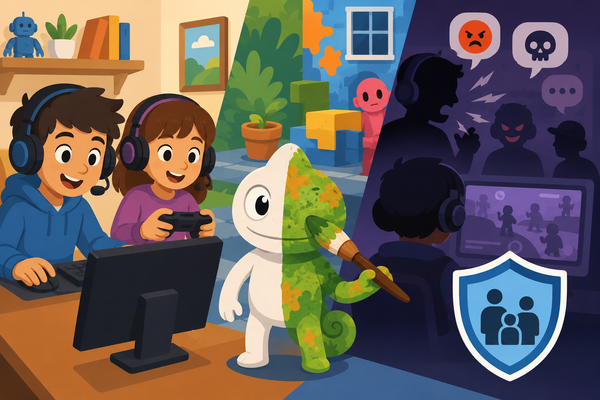
MECCHA CHAMELEON has become one of Steam's biggest surprise hits, attracting crowds of players with its colorful hide-and-seek gameplay. But while the game itself seems lighthearted, parents should pay closer attention to its online environment, where public lobbies, open voice chat, and limited moderation can expose younger children to offensive language or inappropriate behavior.
The game isn't built around graphic violence or mature themes. Instead, the main risks come from the social interactions that accompany many online multiplayer games. Unfortunately, that distinction can be easily missed when children discover the game through TikTok, YouTube or friends at school.
Key takeaways
- MECCHA CHAMELEON is a viral multiplayer hide-and-seek game, and its colorful visuals can make it appear suitable for younger children.
- The gameplay isn't the main concern—public lobbies, voice chat and interactions with strangers present the biggest risks for younger players.
- The game's moderation tools are still limited, meaning children may encounter profanity, bullying, offensive content or disruptive players in public matches.
- Private lobbies with friends offer a much safer experience than joining random public servers.
- Parents don't need to ban the game, but they should discuss online safety, encourage private games and teach children not to share personal information or move conversations to other platforms.
What is MECCHA CHAMELEON?
Released in June 2026 by independent developer lemorion_1224, MECCHA CHAMELEON became one of Steam's surprise success stories almost overnight. Instead of traditional combat, the game turns hide-and-seek into the main concept.
The basic idea is simple. Players begin each round as either Hiders or Seekers. Hiders must find a good hiding place and then paint their white character to blend into the environment. Success depends less on quick reflexes and more on observation, artistic skill and camouflage.
The simple concept has resonated with players and content creators alike. Every match is different, leading to funny moments and near-impossible hiding spots that are perfect for short clips on TikTok, YouTube Shorts and Twitch.
Why is your child suddenly talking about it?
MECCHA CHAMELEON has all the ingredients of a viral game. It's relatively inexpensive, very easy to understand, funny to watch, and rewards creativity instead of fast reflexes. Like Among Us and Lethal Company before it, much of its popularity comes from watching other people play.
Children are especially likely to discover it through TikTok clips, YouTube Shorts, Twitch streams, Discord communities or friends at school.
By the time many parents hear the name MECCHA CHAMELEON, their child has probably already watched dozens of videos featuring hilarious wins, clever disguises and streamers laughing at players who walk right past perfectly camouflaged opponents.
Is MECCHA CHAMELEON safe for younger children?
The answer depends less on the gameplay than on where and with whom they're playing. As it stands, the game has no official age rating, but the developer does mention that it features in-game chat and online interactivity.
While a private match with friends is essentially a digital game of hide-and-seek, the public online lobbies are where most concerns begin.
Like many viral multiplayer games, MECCHA CHAMELEON allows players to join public servers hosted by strangers. Unless children deliberately stick to private games, they may find themselves interacting with people from anywhere in the world.
The biggest concern: public lobbies
The game's popularity has outpaced many of its moderation features. Parents should know about several recurring issues reported by players and reviewers.
Children may interact with strangers
Public servers allow anyone to join unless the host creates a private lobby. That means younger children can easily end up interacting with adults or older teenagers they have never met.
Voice chat isn't filtered
The addition of proximity voice chat makes the game more immersive, but it also exposes players to whatever nearby users decide to say. Depending on the lobby, kids may hear profanity, sexual jokes, offensive language, discriminatory slurs and other problematic discussions.
Even if your children never use voice chat, they can still hear everyone else.
Limited moderation
Several user reviews have also criticized the game's moderation tools. Players report that disruptive users can often repeatedly join public games, while reporting options remain limited compared to those in larger multiplayer titles.
Offensive player behavior
Parents should also be aware that public matches may include players who try to shock others.
Community reports mention things like offensive usernames, hateful imagery created with the in-game painting system, bullying, griefing or simply intentionally disruptive behavior.
These problems aren't unique to MECCHA CHAMELEON. They exist in many online games but younger children are often less prepared to deal with them.
There's another risk: fake downloads
Whenever a game becomes an overnight success, scammers take notice. Unofficial mobile games and copycat titles have already begun appearing, attempting to capitalize on MECCHA CHAMELEON's popularity.
Parents should be cautious if children ask to download:
- "Free" mobile versions
- APK files
- Unofficial installers
- Cheats
- Mods
- Giveaway downloads
These are common ways cybercriminals spread malware or steal gaming accounts whenever a new game goes viral.
What parents can do
Fortunately, children don't have to avoid the game altogether. A few simple habits can make the experience much safer. Parents can encourage kids to play with classmates or real-life friends instead of joining random public matches.
They can also remind children that the people they meet in games are still strangers, even if they seem friendly. They should never share their real name, school, address, phone number, social media accounts or any other sensitive personal information.
For younger players, turning off voice chat can significantly reduce exposure to inappropriate conversations. But keep in mind that they can still hear what other people are saying.
Also, only install MECCHA CHAMELEON from legitimate stores such as Steam. Avoid websites offering free downloads, modified versions or cheats.
Help your family game more safely
Gaming is one of the main ways children socialize today, but every online multiplayer game carries risks. Bitdefender Parental Control, included with Bitdefender Ultimate Security, helps parents manage screen time, monitor installed applications and encourage healthier digital habits, while protecting the family's devices from malware, phishing and malicious downloads.
FAQ
What is MECCHA CHAMELEON?
MECCHA CHAMELEON is a multiplayer hide-and-seek game where players camouflage themselves by painting their characters to match the environment.
Is MECCHA CHAMELEON safe for kids?
The gameplay is generally family-friendly, but public online lobbies may expose children to strangers, offensive language and toxic behavior.
Can children play only with friends?
Yes. Private lobbies let players limit matches to invited friends, offering a much safer experience for younger children.
Does MECCHA CHAMELEON have voice chat?
Yes. The game supports proximity voice chat, allowing nearby players to hear each other during matches.
Should parents ban the game?
Not necessarily. For many families, using private lobbies, discussing online safety and supervising younger children's online interactions are more effective than banning the game outright.
tags
Author

Silviu is a seasoned writer who followed the technology world for almost two decades, covering topics ranging from software to hardware and everything in between.
View all postsYou might also like
Bookmarks
