Apple Watch can now remember conversations. What could go wrong?

September 11, 2026
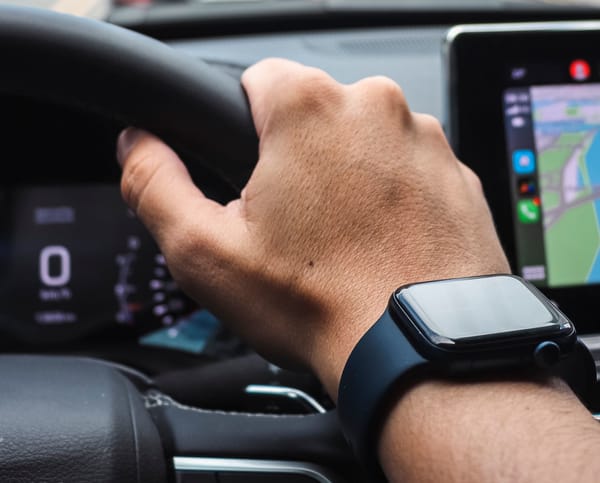
Apple’s latest smartwatches can summarize conversations and retrieve snippets of what was just said. Apple says the features are built around privacy, but they also raise an awkward question: what about the people talking to the person wearing the watch?
Key takeaways
- Apple Watch Series 12 and Ultra 4 introduce new AI-powered Audio Intelligence features
- Live Rewind can turn the previous 15 seconds of conversation into text
- Siri Recap can generate high-level summaries of conversations throughout the wearer’s day
- Apple says raw audio isn't stored or accessible to apps, the operating system or Apple itself
- Live Rewind provides audible and visual indications when activated, but that doesn't mean everyone nearby has consented
- Bitdefender's Consumer Cybersecurity Survey finds 77% of respondents trust Apple to some extent, making it one of the most trusted Big Tech companies
- Consumers should treat AI wearables as they would any device capable of capturing sensitive information: understand the settings and respect other people's privacy
Your watch is listening
Apple is giving its latest smartwatches an impressive new ability: they can listen to the world around you and use AI to help you remember what you heard.
The new Apple Watch Series 12 and Apple Watch Ultra 4 introduce Audio Intelligence, a collection of features that use the watches’ microphones and Apple’s AI technology to recognize sounds, identify music and process conversations.
Two features in particular – Live Rewind and Siri Recap – are attracting attention because they can process conversations involving people other than the one wearing the watch.
Live Rewind is designed for those moments when you miss something someone just said.
Double-pressing the Apple Watch's Digital Crown lets the wearer see the previous 15 seconds of conversation as text. The underlying audio is discarded after processing, while the resulting text can be saved if the user chooses.
The watch also plays an audible chime – even in silent mode – and displays a visual indication when Live Rewind is activated, helping alert people nearby.
Apple has built several safeguards to prevent that capability from becoming a surveillance tool. Audio isn’t stored as a conventional recording, raw audio is protected inside a hardware-isolated environment, and not even Apple itself can access the underlying audio, the company says.
But technical privacy and conversational privacy aren't necessarily the same thing.
Siri Recap goes further
Rather than producing a word-for-word transcript, it can create high-level notes from conversations during the day. Apple says it doesn't identify individual speakers and is designed to omit sensitive information such as financial and authentication data.
Apple also says Audio Intelligence doesn't create stored audio recordings. Raw audio is processed inside the Secure Exclave built into its S11 chip, where it can’t be accessed by the operating system, apps or even Apple. Siri Recap uses Apple's Private Cloud Compute to generate its final summaries.
Those are meaningful privacy protections. But they don't eliminate every privacy concern.
Privacy isn't only about where the data goes
The Electronic Frontier Foundation (EFF) argues that people should have a say in whether technology is used to document their words in a private conversation.
Speaking to The Register, EFF privacy litigation director Adam Schwartz warned that people have no practical way to consent to – or reject – this kind of processing when somebody nearby is wearing the watch.
There is an important distinction here.
Apple isn't secretly storing an endless archive of everything its watches hear. Live Rewind announces itself with an audible signal, Siri Recap doesn't produce a verbatim transcript, and Apple has deliberately designed its architecture to minimize access to the audio.
But the person standing across the table may still have their words unexpectedly processed and turned into information.
And as AI moves from phones and computers into watches, glasses, earbuds and other wearables, that distinction is likely to become increasingly important.
How it can go (really) wrong
The clearest examples of how Apple’s tech could go sideways are the mundane situations where nobody thinks they're having a “recorded” conversation:
- The family conversation: You quietly tell your partner about a medical issue, financial problem or family dispute. Someone else at the table is wearing a capable smartwatch, and part of the conversation ends up captured as text or reflected in a later summary.
- The office chat: Two colleagues casually discuss an upcoming reorganization, a coworker's performance or an unannounced project. The watch of a third colleague processes the conversation. A private conversation now exists as retrievable information.
- The coffee-shop confession: A friend tells you something deeply personal over coffee. You would never dream of pulling out your phone and recording them, but a wearable makes capturing or summarizing parts of the conversation much less conspicuous.
- The accidental eavesdropper: You're talking about your finances, relationship or health at the next table in a restaurant. Someone nearby isn't deliberately spying, but their wearable may still process snippets of speech that weren't intended for them.
- The argument: After a heated disagreement, someone retrieves the last few seconds of what was said. A feature intended as a memory aid becomes a tool for preserving a remark the speaker reasonably assumed was ephemeral.
- The sensitive appointment: A person wears the device during a meeting with a doctor, therapist, lawyer, accountant or financial adviser. Even if the audio isn't permanently stored, summaries or snippets could preserve information normally treated as highly confidential.
- The child who can't meaningfully consent: Parents, teachers or other adults discuss a child's personal circumstances while an AI wearable is present. The child may have little understanding that what they say—or what others say about them—can be processed and summarized
Apple enjoys considerable consumer trust
The issue is particularly interesting because Apple is one of the most-trusted technology companies.
In our latest Consumer Cybersecurity Survey, covering more than 7,000 internet users across seven countries, 77% of respondents said they trust Apple to some extent. Google scored 88% and Microsoft 85%.
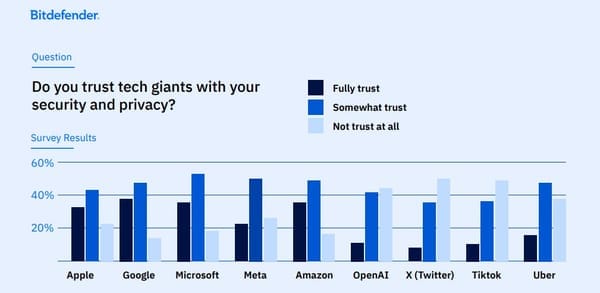
That contrasts sharply with attitudes toward some social networks and newer AI platforms. More than half of respondents said they don't trust X/Twitter (52%) or TikTok (51%) at all, while 45% expressed similar skepticism toward OpenAI.
Yet trust isn't a blank check.
Our survey also shows that consumers remain protective of personal information: 59% don't want Big Tech accessing their financial information, while photos and location data are also areas many respondents would rather keep private.
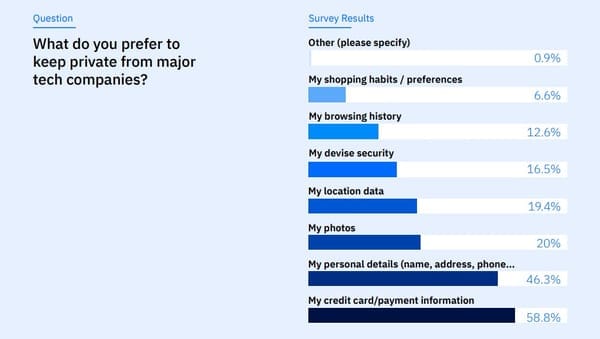
Features like Audio Intelligence show why trust increasingly depends not just on whether a company can secure the data it collects, but also on what technology is allowed to collect or infer in the first place.
How to use AI wearables without people avoiding conversations around you
For now, there's no reason to panic about a smartwatch spying on every conversation around you. Apple's safeguards are substantial, and these features are designed to give users control over when and how they're used. But a little etiquette goes a long way.
If you use an AI-powered wearable:
- Familiarize yourself with its microphone, transcription, recap and recording features rather than simply accepting the default settings
- Disable conversation-processing features you don't need
- Tell people when you're deliberately using a feature that can transcribe or summarize what they're saying
- Avoid using these tools during conversations involving health, finances, work, legal matters or other personal information
- Don't assume that an audible notification automatically equals consent
- Review saved summaries and transcripts periodically and delete anything you no longer need
- Be particularly cautious in workplaces, schools and other environments where privacy policies or local laws may apply
If you're concerned about somebody else's wearable during a sensitive discussion, it’s perfectly reasonable to ask them to disable its listening features – or simply remove the device for the conversation.
AI is giving everyday devices increasingly powerful abilities to interpret what's happening around us. But we still want a meaningful say in what technology gets to remember – especially when it comes to that most human of activities: conversation.
On topic:
Which Big Tech companies do you trust? We asked netizens
Big Tech calls for cyber-defense before AI attacks surge
Update your iPhone and Mac! Apple patches image flaw with spyware potential
tags
Author

Filip has 17 years of experience in technology journalism. In recent years, he has focused on cybersecurity in his role as a Security Analyst at Bitdefender.
View all postsYou might also like
Bookmarks
